
Social Entrepreneurship in South Africa: Challenges, Opportunities, and the Road Ahead
What can be a solution to deep-rooted economic and social challenges? In South Africa, social entrepreneurship is emerging as a powerful response. As inequality persists and traditional systems fall short, social entrepreneurs are building ventures that blend impact with sustainability.
From understanding why social entrepreneurship matters for South Africa’s economy to exploring how social innovators can be supported, here is everything you need to know.
What is the current state of social entrepreneurship in South Africa?
Despite financial, regulatory, and legal challenges, the African continent is brimming with potential. Social entrepreneurship is emerging as a powerful driver of economic and social transformation. According to the Schwab Foundation's "State of Social Enterprise Report," Africa's contribution to the global social entrepreneurship sector is substantial yet often overlooked by mainstream media. The continent hosts an estimated 2.18 million social enterprises, contributing approximately 3.2% to its GDP.
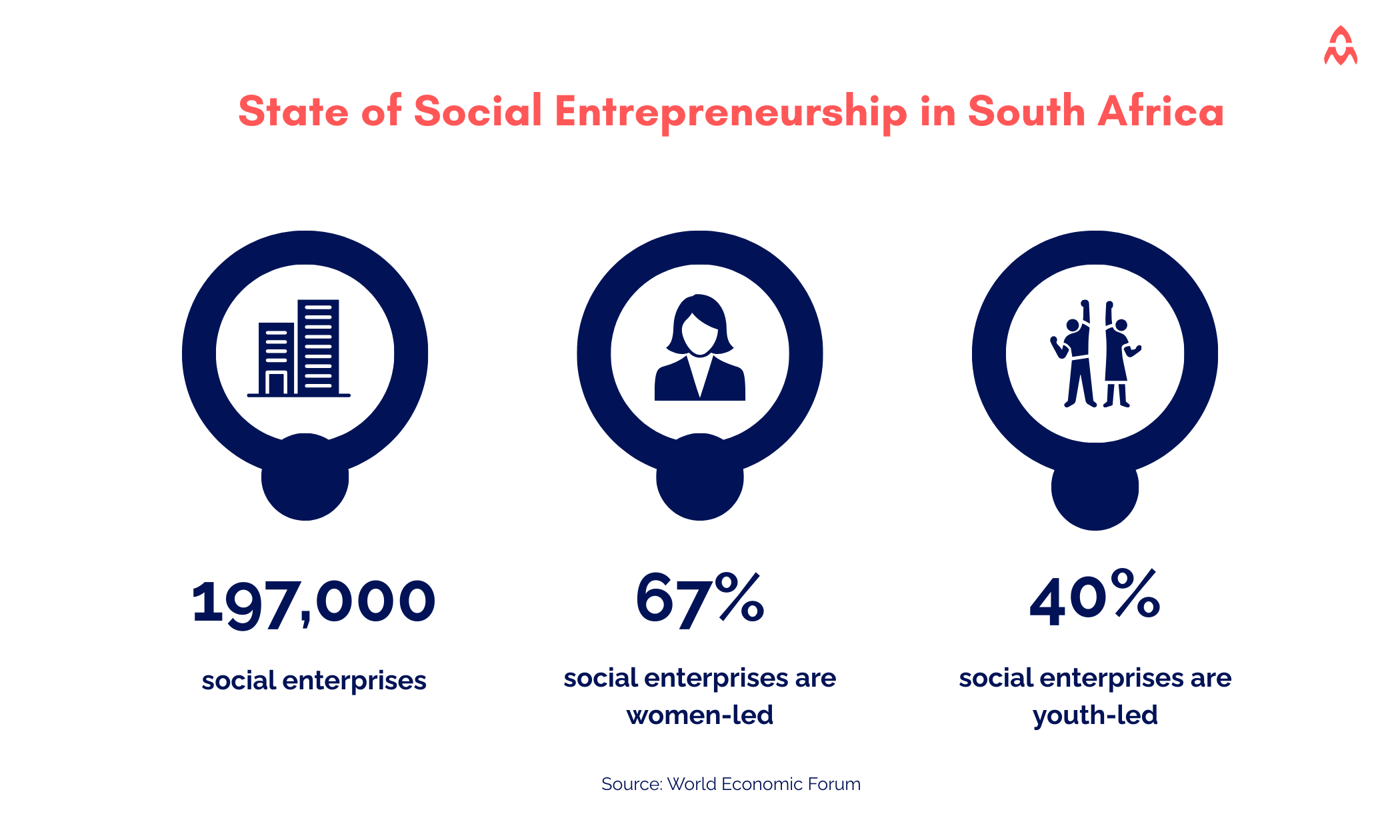
Schwab Foundation’s 2025 State of Social Enterprise report states that South Africa has 197,000 social enterprises, with notable leadership diversity: 67% are women-led, and 40% are youth-led. South African entrepreneurs have created 393,000 jobs and are addressing critical gaps in education, healthcare, and civic engagement.
However, realizing the full potential of this sector requires action. Stronger regulatory frameworks, legal clarity, and increased financial support are critical to sustaining momentum and scaling impact across the continent.
Why is social entrepreneurship in South Africa critical to the economy?
Social entrepreneurs, operating at the intersection of business and impact, are vital to economic growth. Amid significant challenges, including poverty and income disparities, social enterprises develop innovative solutions and drive growth in areas where traditional models have failed. Here are some reasons why social entrepreneurship in South Africa is critical to economic growth.
Addressing inequality and poverty: The South African economy faces several challenges, exacerbated by the COVID-19 pandemic. The World Bank estimates the poverty rate at 68% in 2025, while inequality levels are among the highest recorded globally. To tackle these issues, social entrepreneurship is emerging as a viable solution. These ventures provide employment opportunities for youth and women, who are most affected by income disparities and poverty, and promote economic empowerment by building skills and capacity and strengthening resilience in the face of challenges.
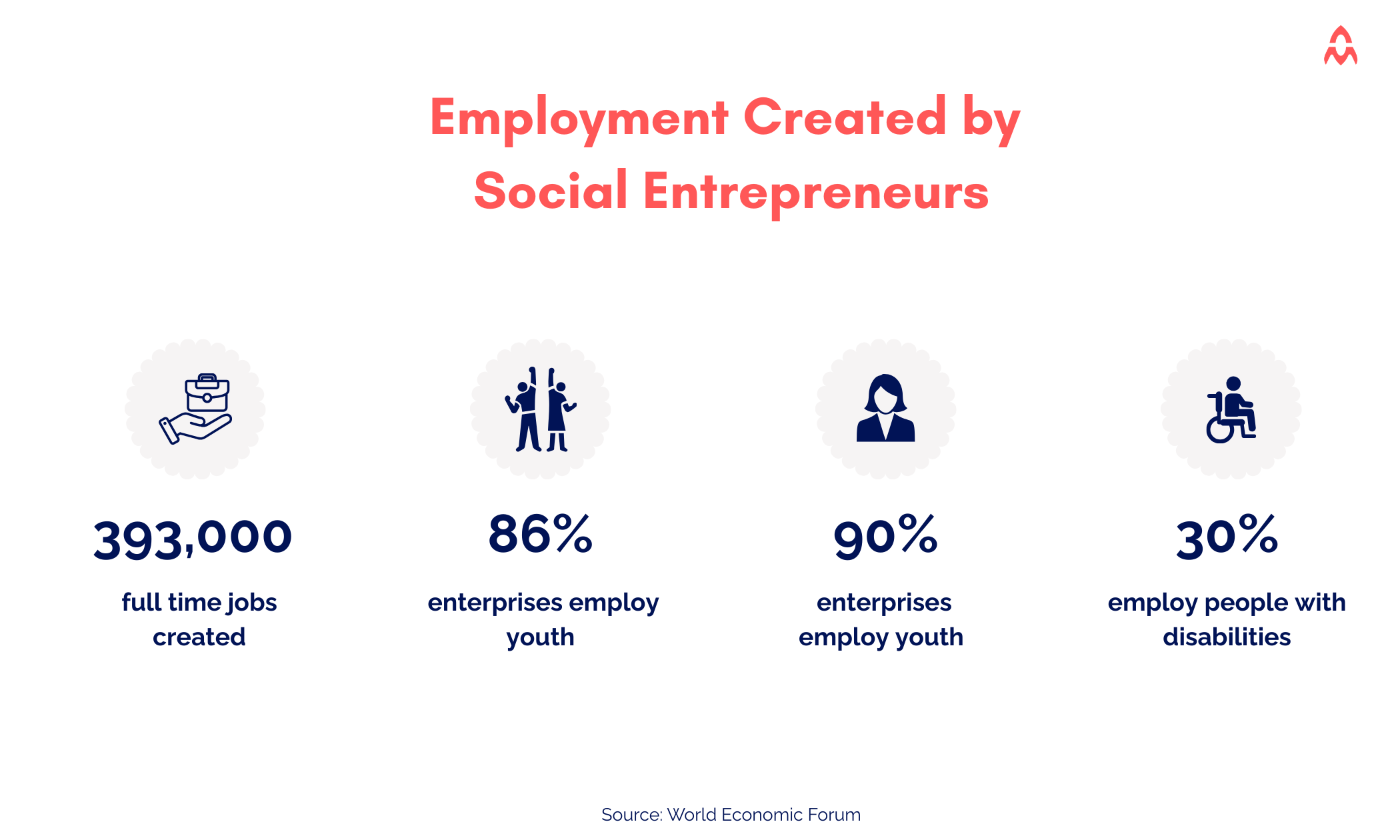
Job creation: Social entrepreneurship in South Africa has also been critical to improving the country's employment rate. Schwab Foundation’s report states that, of the 3,93,000 full-time jobs created, 86% are held by youth, 90% by women, and 30% by individuals with disabilities. With 98% of businesses expected to expand operations in the next year, this impact is only likely to grow. This stands in stark contrast to other businesses in Africa, where 40% of MSMEs have laid off employees and are unlikely to hire in the future.
Sustainable development: Climate change can significantly harm South Africa’s economy. According to the World Bank, it can negatively impact key sectors such as agriculture, water resources, and tourism, further strain marginalized communities, and widen social disparities. Social entrepreneurship offers a means of balancing profitability with sustainability. Social enterprises promote economic growth by creating jobs and improving productivity while ensuring their operations align with sustainable development goals.
Community empowerment: Research on the relationship between social entrepreneurship and community empowerment demonstrates that social enterprises in South Africa drive significant impact. According to Keratiloe Sishoma Mogotsi and Nicole Baron, in their paper “Local solutions for local problems: the contributions of social enterprises to resilient urban communities in South Africa,” social enterprises help build community resilience by addressing market gaps, fostering innovation, increasing employment, and strengthening community identity. Another study, “The Function of Social Entrepreneurship in Tackling Social Development Issues in South Africa,” by Hloniphile Zwane, found that education and training programs support capacity-building initiatives that empower individuals. They found that when social entrepreneurs encouraged the development of business and agro-processing skills in KwaZulu-Natal, it fostered social and economic progress in the region.
What are the challenges faced by social entrepreneurs in South Africa?
While social entrepreneurship in South Africa shows remarkable potential, enterprises have to overcome several economic, institutional, and legal barriers. The country lacks a dedicated legal framework for social enterprises. Systems are primarily designed for nonprofit or community-interest organizations, resulting in a lack of a clear legal identity for social enterprises. They are not allowed to register, receive funding, or be categorized as tax entities.
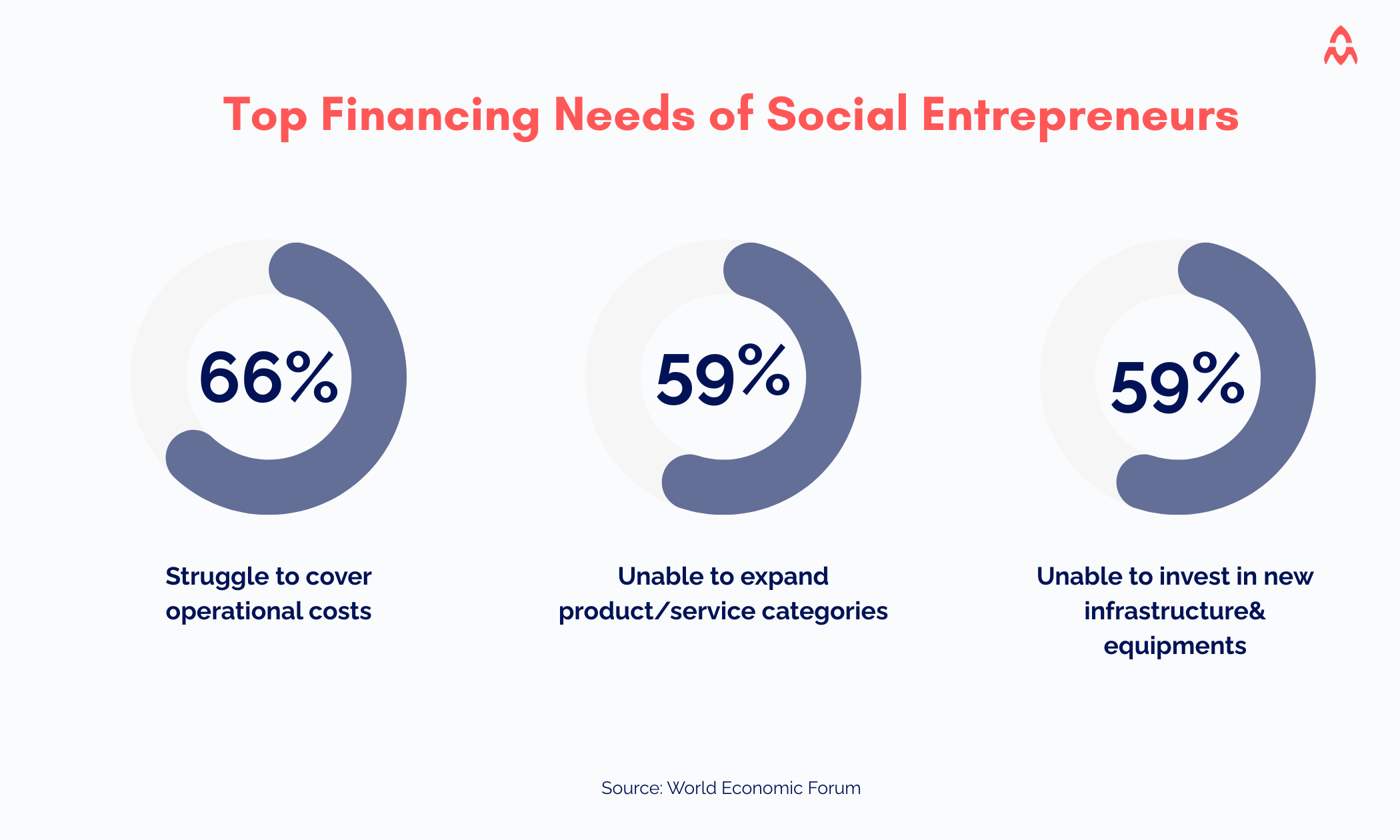
Social enterprise development is also adversely affected by financing constraints. According to Schwab Foundation’s report, 66% of entrepreneurs struggle to cover operational costs, 59% to expand operations, and another 59% to invest in equipment and infrastructure. A lack of institutional support, venture capital, and investor visibility hinders their ability to grow their businesses.
Lastly, the lack of knowledge and understanding among investors on social entrepreneurship negatively impacts growth. In South Africa, social enterprises are often conflated with charitable work or community activism, making it challenging for entrepreneurs to establish credibility or secure funding. Social entrepreneurship development requires highlighting entrepreneurs' stories and the impact they create, both economically and socially.
How can entrepreneurs access social entrepreneurship funding in South Africa?
With the economic, social, and ecological challenges facing South Africa, the need for social entrepreneurship has never been greater. However, funding constraints, institutional gaps, and regulatory hurdles create significant barriers that restrict entrepreneurs' ability to scale their impact. Despite these obstacles, efforts are underway to build a more supportive ecosystem, with the government and various stakeholders working to provide resources and frameworks that support founders in growing their ventures.
Bertha Centre for Social Innovation and Entrepreneurship: The Bertha Centre for Social Innovation and Entrepreneurship is a part of the University of Cape Town’s Graduate School of Business in partnership with the Bertha Foundation. It is Africa’s first academic venture dedicated to advancing social innovation and entrepreneurship. They have awarded over ZAR 7 million to support students building ventures in the fields of social, environmental, and economic change, as well as human rights.
SAB Foundation: The SAB Foundation supports entrepreneurs building sustainable solutions that address social issues and empower communities through grants and capacity-building programs. Their focus areas include businesses that positively impact women and youth empowerment, people with disabilities, and rural upliftment. They have supported 8024 ventures that have created 13,679 jobs and a 400% increase in turnover.
E Squared Investments: E Squared Investments is an impact investor that provides funding and end-to-end business support, including post-funding assistance programs, to social enterprises. They support ventures that address economic development and social change while generating sustainable commercial value. Since their inception, they have disbursed R544.8 million across six sectors in 21 investments. In 2024, their investment totaled R259.9 million, which included five women-owned businesses.
ORIBI: ORIBI is a nine-month incubator program that promotes social entrepreneurship by creating an ecosystem that supports founders through skill development, financing, and networking opportunities. They have supported 110 entrepreneurs whose ventures have created more than 375 economic opportunities and more than 10,000 indirect beneficiaries.
Futurize: Futurize designs innovation and incubator programs that provide university students and recent graduates with a world-class ecosystem to help ideate and launch business ideas. Their flagship programs, such as Founder Academy Africa and Incubator Africa, focus on teaching young leaders the principles of design thinking, venture building, and critical thinking. They have partnered with over 50 corporations and universities to promote entrepreneurship and enterprise education and have supported and promoted the works of over 7500 entrepreneurs.
Social Enterprises in South Africa: Ventures Driving Sustainable Impact
Across the country, social enterprises are transforming ideas into action. Not only are they addressing gaps left by traditional systems in the market, but they are also creating new, sustainable models. From improving ecological systems to promoting access to clean water, these social enterprises are proof that profit can coexist with impact.
Afriwild Carbon Development: Founded as a partnership between Africlimate Solutions and Rewild Capital, Afriwild develops carbon-removal projects tailored to Africa's ecological and socioeconomic realities. Their approach prioritizes positive outcomes for communities, climate, and biodiversity. One of their notable projects is a carbon feasibility study for South African National Parks, which helped create new revenue streams for conservation, restore ecosystems, and strengthen livelihoods.
Regenize: Regenize is a climate-tech social enterprise aiming to become Africa’s leading circular-economy platform. They are developing an inclusive and decentralized recycling ecosystem that empowers communities, creates dignified employment opportunities, and accelerates the country’s transition to a green economy. Across their projects, they have combined technology, behavioral insights, and community partnerships to drive large-scale impact.
Liquid Gold: Headquartered in South Africa, Liquid Gold addresses sanitation challenges through a circular economy approach. Founder Orion Herman identified the critical issue of inadequate water sanitation in marginalized communities, particularly how waste mismanagement harms both public health and the environment. Liquid Gold's system transforms human and organic waste into valuable resources such as fertilizer, compost, and animal feed. This technology improves hygiene conditions, prevents water pollution, and reduces disease transmission in underserved areas.
ECOBA: ECOBA is a South African social enterprise that produces portable handwashing solutions for areas with limited water infrastructure. Founded by Kgalabi Mongatane, the venture was born of a critical gap in healthcare settings. Medical professionals working in temporary facilities lacked convenient access to handwashing stations, requiring them to travel long distances between patient consultations. Mongatane's eco-friendly, self-contained wash basins deliver clean water directly to the point of care, improving hand hygiene compliance and allowing healthcare workers to focus on patient care rather than navigating infrastructure challenges.
Advancing social entrepreneurship in South Africa requires deliberate action. Stronger regulatory frameworks, greater access to capital, and stronger collaboration among government, investors, and support organizations are essential to unlocking the full potential of social entrepreneurship. As South Africa continues to build its ecosystem, the success of ventures such as Afriwild, Regenize, Liquid Gold, and ECOBA demonstrates what is possible when innovation meets purpose. With 98% businesses expected to expand, social entrepreneurship requires sustained commitment and strategic support to drive inclusive growth, create dignified employment, and address the country's most pressing challenges.
Partner with us
We are a social impact firm accelerating growth for organizations, governments & universities. Collaborate with Futurize to spearhead entrepreneurship programs, startup incubators, and inclusive innovation strategies to generate groundbreaking ideas and businesses for a sustainable future.