
Human Centered Design: Innovation Principles & Processes
The innovation landscape faces a persistent paradox in 2025. Organizations worldwide are investing heavily in emerging technologies, from artificial intelligence (AI) to the Internet of Things (IoT), yet most fail to create meaningful impact. The fundamental reason? Innovators and business leaders overlook their most critical asset: their customers. The days of technology-first product innovation have long ended. In today’s digital era, technology is no longer a differentiator in itself. Understanding customer needs, experiences, and pain points provides organizations with the competitive advantage essential for success. The only way to challenge the current mindset for innovators and business leaders is to adopt the human-centered design (HCD) approach when building solutions.
What is Human-centred Design?
Human-centered design is an innovative approach to problem-solving that places people at the center of the design and development process. By anchoring decisions in authentic human needs and behaviors, HCD transforms how organizations develop solutions across sectors. As a strategic framework, it reduces risk, increases the likelihood of adoption, and strengthens the return on innovation investments.
Human Centered Design vs Design Thinking Explained: What Innovators Need to Know:
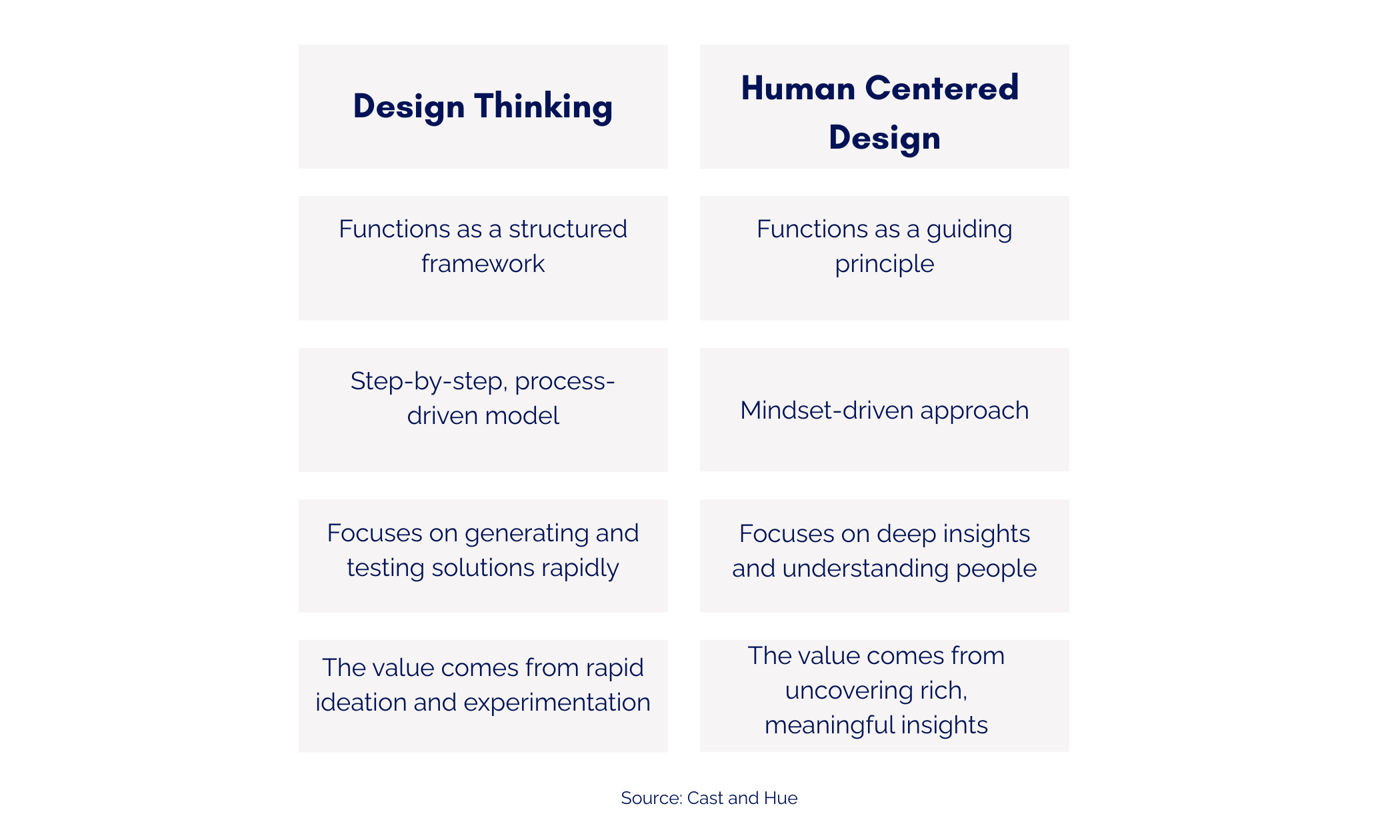
Human-centered design and design thinking are terms often used interchangeably. While there are similarities between the two concepts, such as a collaborative problem-solving approach and the creation of sustainable solutions, both areas of design research are fundamentally different.
Design thinking is a broader problem-solving framework that focuses on human needs, emphasizing understanding the problem, generating multiple possibilities, and validating what is feasible and workable. It offers a structured pathway and supports organizations in shaping solutions that are both practical and achievable.
Human-centered design is a methodology that starts with deep empathy for the people you are designing with by considering their emotions, needs, and behaviours. It serves as the guiding principle, while design thinking provides the structured path for innovators to act on those insights.
What are the Four Human-centered Design Principles?
Changing market conditions and customer demands have prompted innovators to revisit fundamentals and incorporate user-centered design principles into their methodologies. Grounding products in genuine user insights, iterating based on direct feedback, and prioritizing human experience over technical capabilities are proving essential for organizations seeking sustainable growth and measurable outcomes.
People-Centered: The foundation of the human-centered design process is placing people at the center of every decision. This means considering all stakeholders involved, understanding their contexts, cultures, and lived experiences, and designing solutions that work effectively within real-world constraints. When organizations incorporate this principle into their development process, innovations deliver measurable long-term value, achieve higher adoption rates, and yield stronger returns on investment.
Addressing the right problems: Under human-centered design, the focus is on understanding the root cause of a challenge rather than addressing surface-level symptoms. Designers and innovators have to ask 'why' an issue exists; its context, triggers, and impact, before deciding on a solution. As user-centered design expert Don Norman emphasizes, when the fundamental problem is left unresolved, symptoms persist and continue to hinder growth.
Activity-centered systems approach: Human-centered design thinking encourages innovators to look at the entire activity and the broader system in which it operates rather than focusing on isolated parts. Norman notes that improving a single component may help locally, but real progress comes from understanding how activities interact across a wider system with multiple stakeholders and varying constraints. Solutions, therefore, need to be shaped with meaningful input from all parties to ensure they align with the culture, environment, and goals of the communities they affect, resulting in outcomes that are both practical and sustainable.
Incremental improvements: User-centered design methods encourage innovators to begin with small, testable interventions rather than attempting a large, definitive solution upfront. The emphasis is on continuous refinement, rapid feedback, and iterative improvements to ensure each version aligns with the needs and behaviors of the users at the center of the process.
What are the 4 Steps of the Human Centered Design Process?
How can teams implement a human-focused design approach within systems built on traditional assumptions? The answer lies in adopting a structured human-centered design process that moves from observation to prototyping and implementation. This systematic approach keeps people at the center of every decision, enabling organizations to create equitable solutions with sustainable, long-term impact.
Futurize’s entrepreneurship program, Founder Academy, and the Futurize Incubator, are built on the principles of human-centered design. It empowers young entrepreneurs to ideate solutions to some of the world's biggest challenges, such as healthcare and climate change mitigation. We’ll explain the steps of the human-centered design process, using the Academy and Incubator’s process to building ventures and startups.
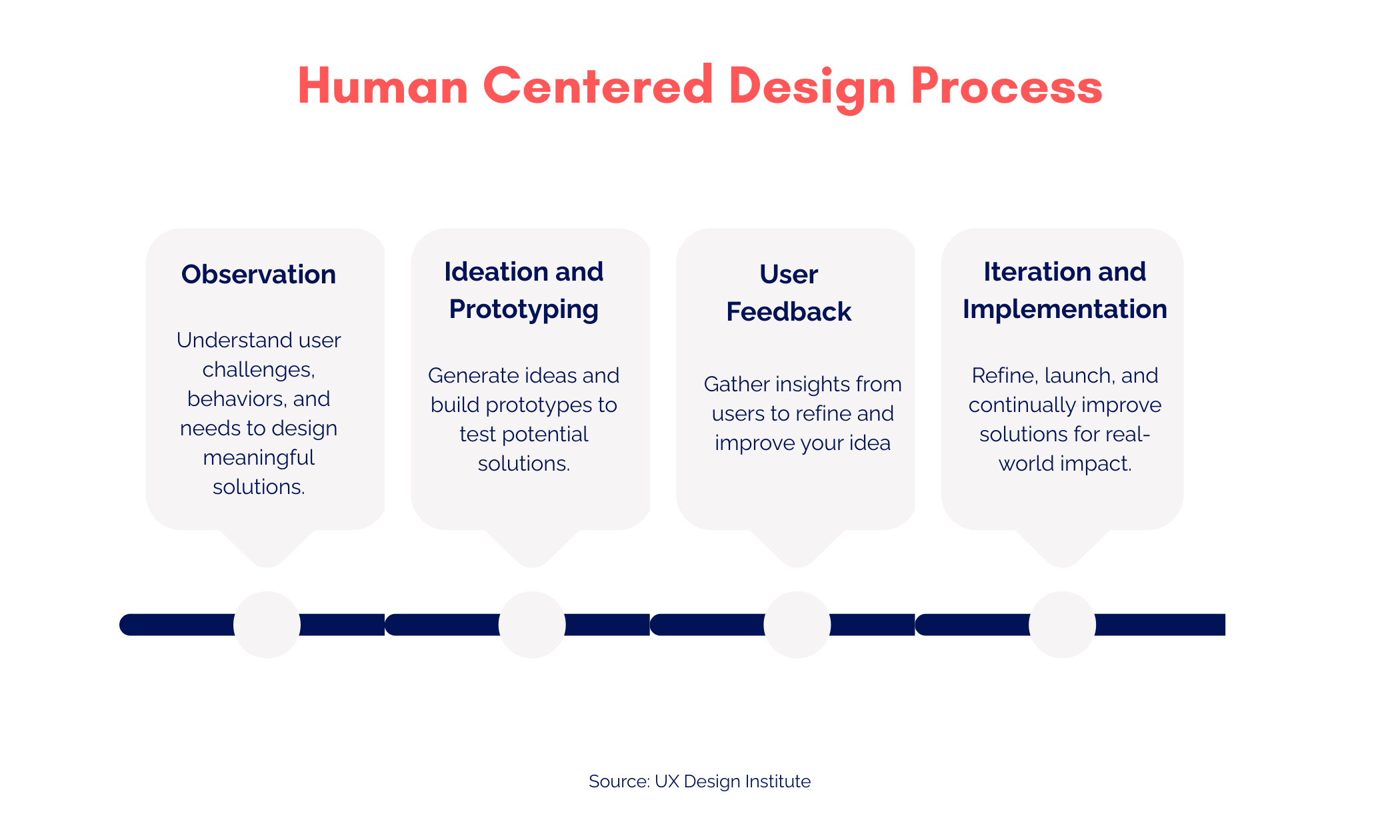
Observation: The first phase of the process focuses on understanding the people for whom a solution is being designed. This includes learning about their challenges, pain points, and behaviors so that the final solution genuinely addresses their needs. Within Founder Academy, students are encouraged to ideate solutions to real challenges in the health and climate sectors. Direct community engagement, interviews and observing real experiences lie at the foundation of building an idea at the Founder Academy, so entrepreneurs can understand the needs of all stakeholders.
Ideation and Prototyping: Based on learnings from the previous phase, multiple ideas are generated and developed as potential solutions to the challenges. Prototypes are also designed and tested with real users to assess their efficacy. At Founder Academy, students develop ideas through mentor-led brainstorming sessions and design-thinking exercises that help them refine and reassess their plans. Once an idea takes shape, teams move on to creating an early prototype that captures the core functionality of their solution, in the form of AI models or data-driven tools, to test whether the idea can work in the real world.
User Feedback: Human needs are at the center of human-centered design thinking, making it essential for innovators to gather user feedback on their products. This is a critical phase, as feedback indicates whether innovations need to be adjusted or refined in a particular direction. The next phase after the Founder Academy, is the Futurize Incubator program, where entrepreneurs conduct customer discovery interviews and validate their target customer segment by program completion. Critical evaluation from experts - including relevant industry professionals, investors, and industry mentors, also serves as a proxy for market validation, allowing teams to refine their value propositions and understand whether their solutions address genuine market needs effectively.
Iteration and Implementation: This is the final phase of the HCD process, where ideas are refined and tested based on user feedback, readying them for market implementation. However, even once the idea is implemented in the market, it is continually iterated and improved to remain suitable and sustainable amid changing market dynamics.
What are Human Centered Design Frameworks?
The principles of human-centered design might be universal, but innovators and designers must continuously refine their methodologies in response to changing market dynamics while keeping users at the center. Structured frameworks offer repeatable approaches for discovery, ideation, and implementation, turning abstract concepts into tangible solutions.
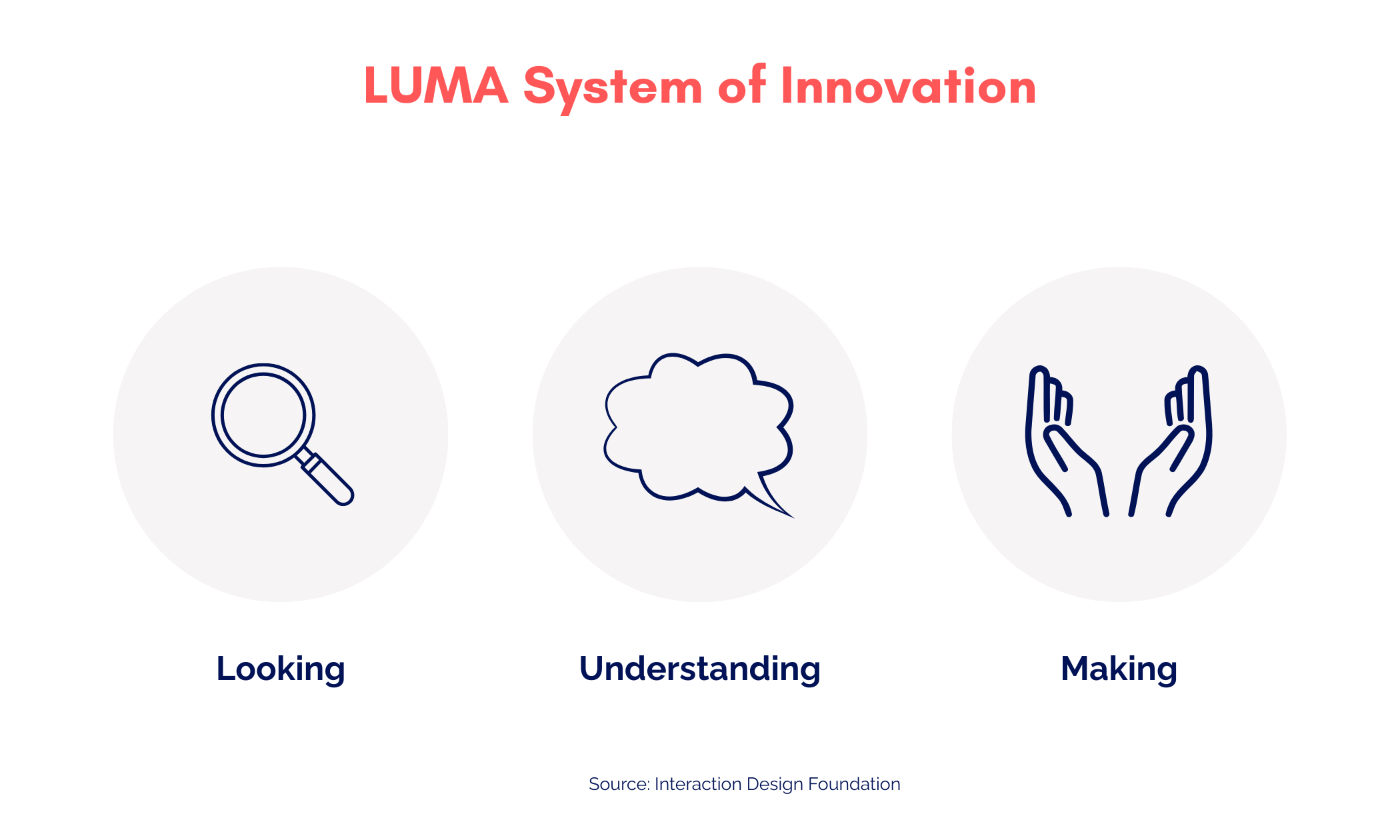
LUMA System of Innovation: The LUMA System of Innovation is a human-centered design framework that organizes proven methods into a practical, repeatable approach for problem-solving. Teams begin by studying people’s behaviors and needs, then use structured ideation tools to develop possibilities, and finally evaluate and refine these ideas through rapid experimentation. By combining these methods into a flexible system, LUMA helps organizations make innovation more systematic, collaborative, and aligned with genuine human experiences.
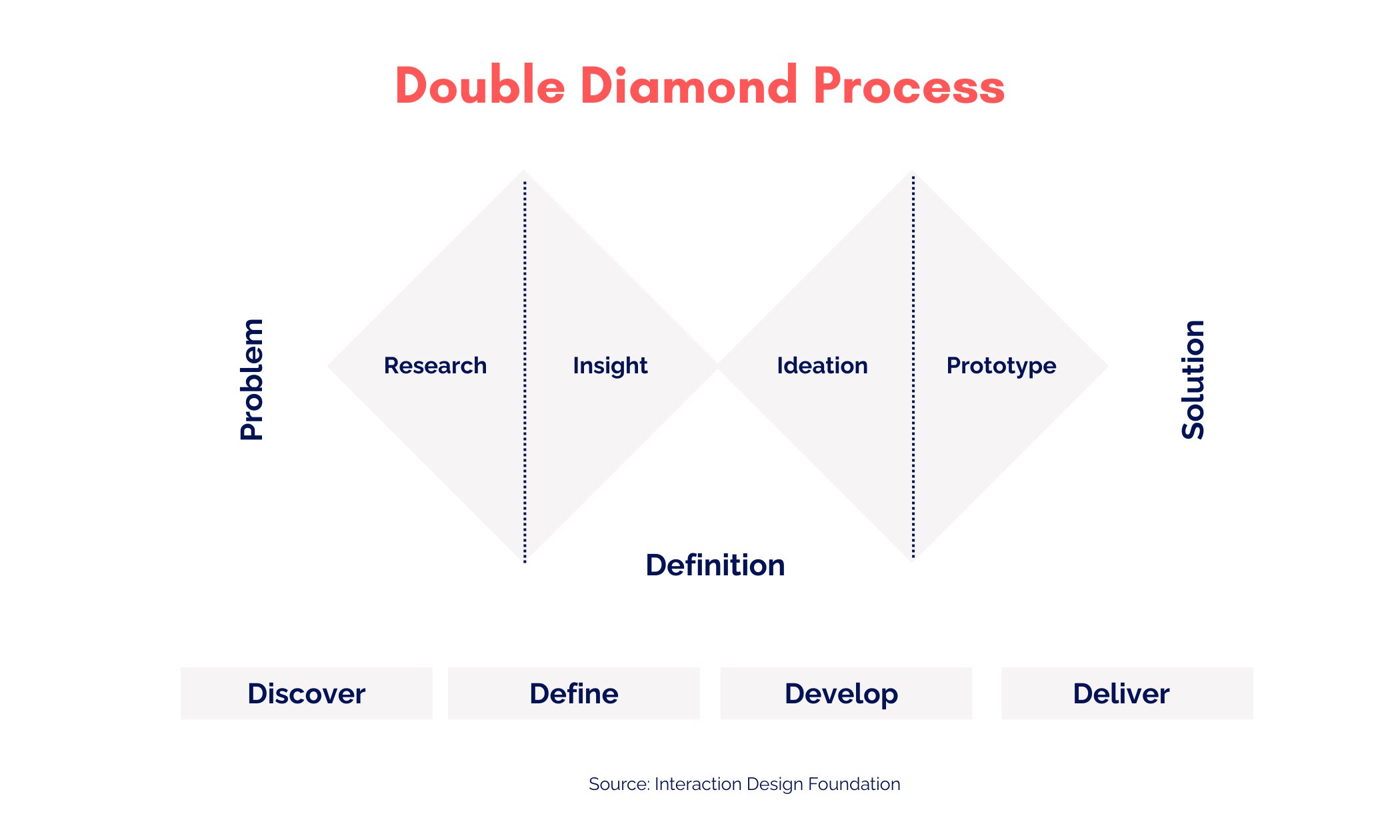
Double Diamond Framework: The Double Diamond framework, popularized by the British Design Council, illustrates how designers move from exploring a problem to creating and delivering a refined solution. It is structured around four stages that guide teams from insight to implementation. The process begins with investigating the problem, gathering user insights, and then defining the core challenge to be addressed. Based on these learnings, potential solutions are developed, refined, and eventually brought to market.
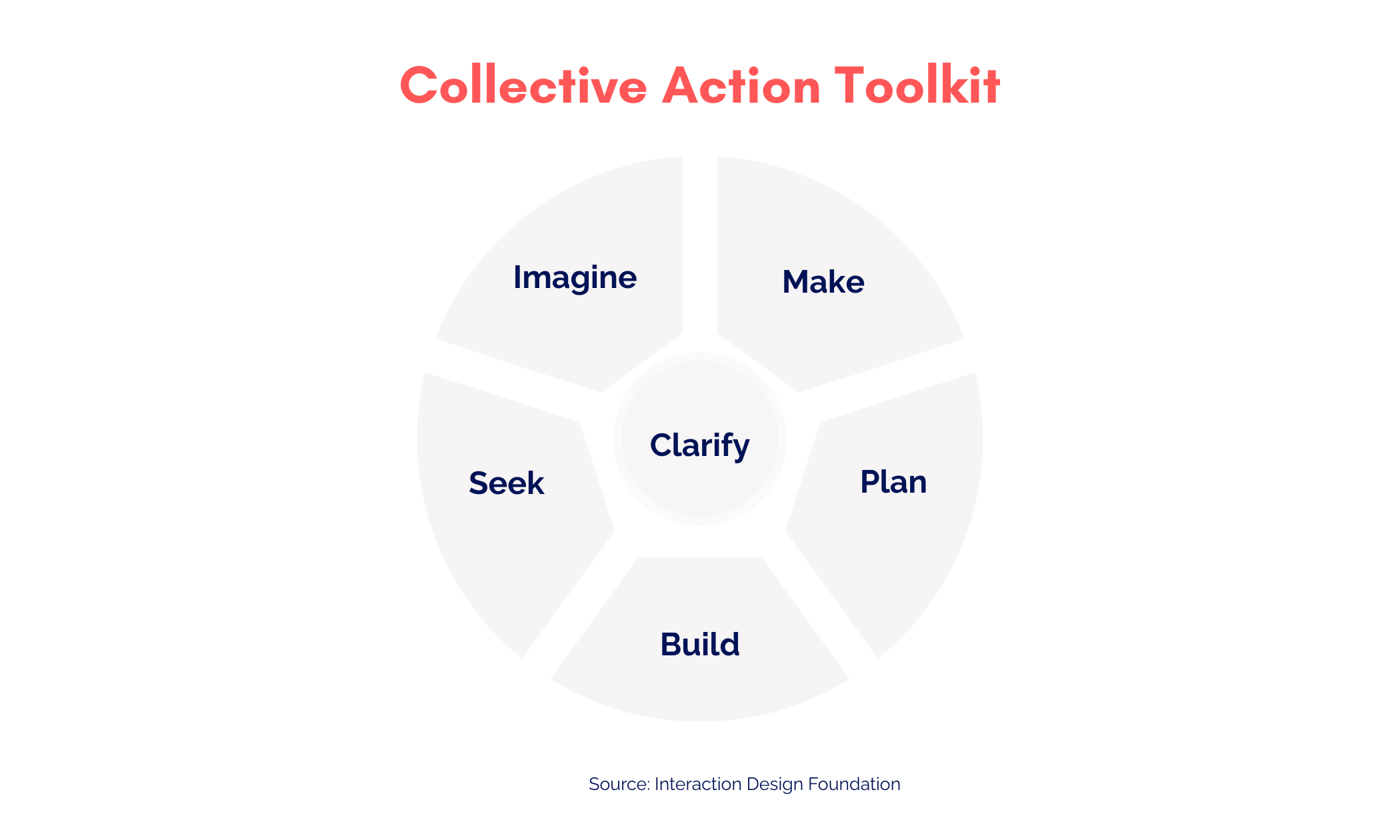
Collective Action Toolkit: The Collective Action Toolkit framework leverages human-centered design principles to address local challenges through collaboration and shared problem-solving. The process involves defining the issue, collaborating with people with diverse strengths, and leveraging the community's power to uncover real needs and insights. These learnings are then used to generate potential solutions, build simple versions to test what works, and develop a clear plan outlining how each member can contribute to achieving the collective goals.
Human Centered Design Examples: How Industries are Implementing a User Centered Design Approach
Human Centered Design in Education: Emerging technologies, shifting student expectations, and rapidly changing labor-market demands have prompted universities to incorporate human-centered design principles into their curricula. By grounding decisions in real learner needs, institutions are creating more inclusive, relevant, and future-ready programs that equip graduates with the critical thinking, adaptability, and problem-solving skills required in a complex, AI-driven world. For instance, platforms such as Khan Academy use design research to create interactive and engaging learning modules for students. Their approach focuses on the needs of a diverse group of students, ensures commitment to accessibility and inclusivity, and has an adaptive learning approach that allows users to personalize their learning journey at their own pace and level of understanding.
Human Centered Design in Healthcare: The role of human-focused design in healthcare is expected to grow over time. According to the World Economic Forum’s Future of Jobs Report 2025, skills such as empathy, creativity, listening, and design thinking are emerging as critical capabilities for addressing challenges like an ageing population and clinician burnout. For instance, many hospitals have adopted human-centric solutions such as easy-to-clean surfaces, improved sanitation facilities to protect healthcare workers, and electronic health records that enhance coordination across departments.
Human Centered Design in AI: Human-centered design is increasingly shaping the development of artificial intelligence, ensuring solutions are grounded in real user needs and designed to enhance rather than replace human capabilities. Across industries, AI is being integrated into operations with this principle in mind. For instance, AI agents are used for customer service. Based on factors such as previous user interactions and common customer challenges, they are trained to provide a human-like experience that feels conversational and provides meaningful resolutions.
Human Centered Design in Engineering: Human-centered design is becoming essential in engineering as industries work to create systems, products, and infrastructure that meet user needs and support long-term sustainability. In civil engineering, this includes planning public spaces with accessibility in mind, through features such as wheelchair-accessible ramps and pedestrian-friendly pathways. In computer engineering, the same approach guides the development of inclusive software, such as applications that use voice recognition or other assistive features to support all user groups.
In conclusion, human-centered design has become a defining force for innovation in 2025. By grounding decisions in real human needs and focusing on experiences rather than assumptions, organizations globally can create solutions that are sustainable and drive a meaningful impact. As new technologies reshape industries and education systems, HCD ensures progress is guided by people rather than tools. With this shift accelerating across sectors, human-centered design thinking is equipping the next generation of leaders to tackle complex challenges with clarity, empathy, and purpose.
Partner with us
We are a social impact firm accelerating growth for organizations, governments & universities. Collaborate with Futurize to spearhead entrepreneurship programs, startup incubators, and inclusive innovation strategies to generate groundbreaking ideas and businesses for a sustainable future.